santiago insignares martínez
Artist
[2026]
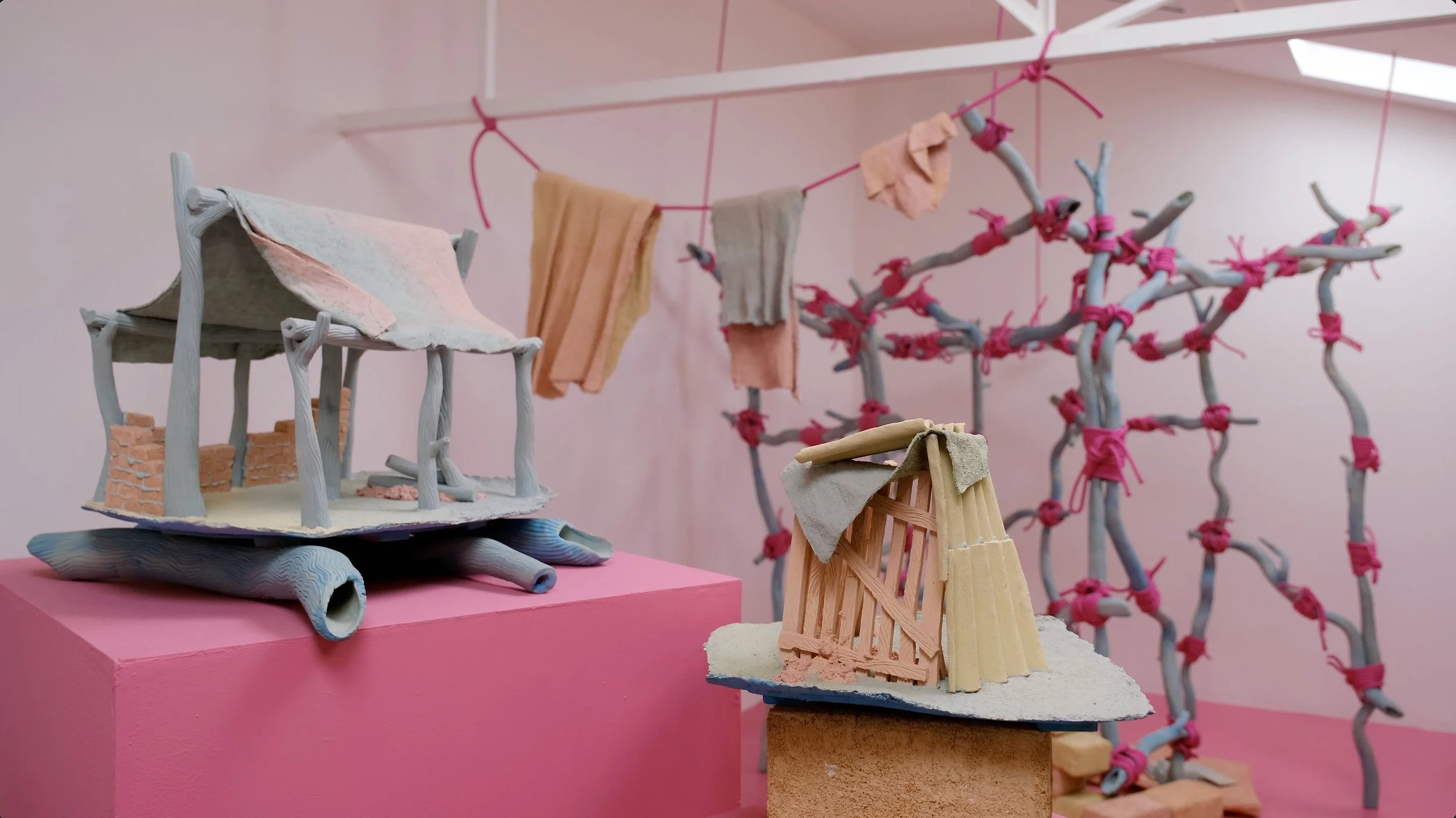
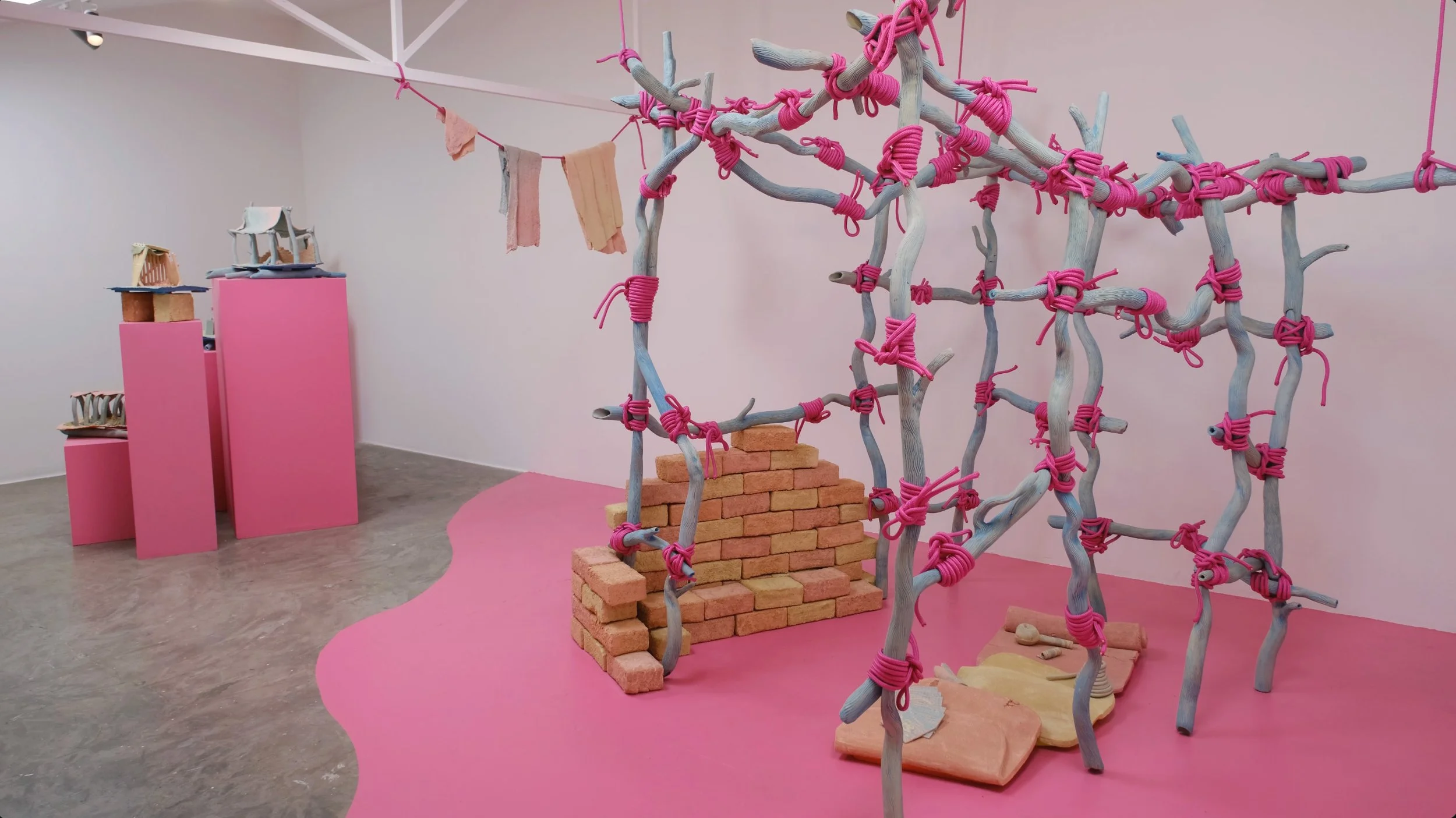
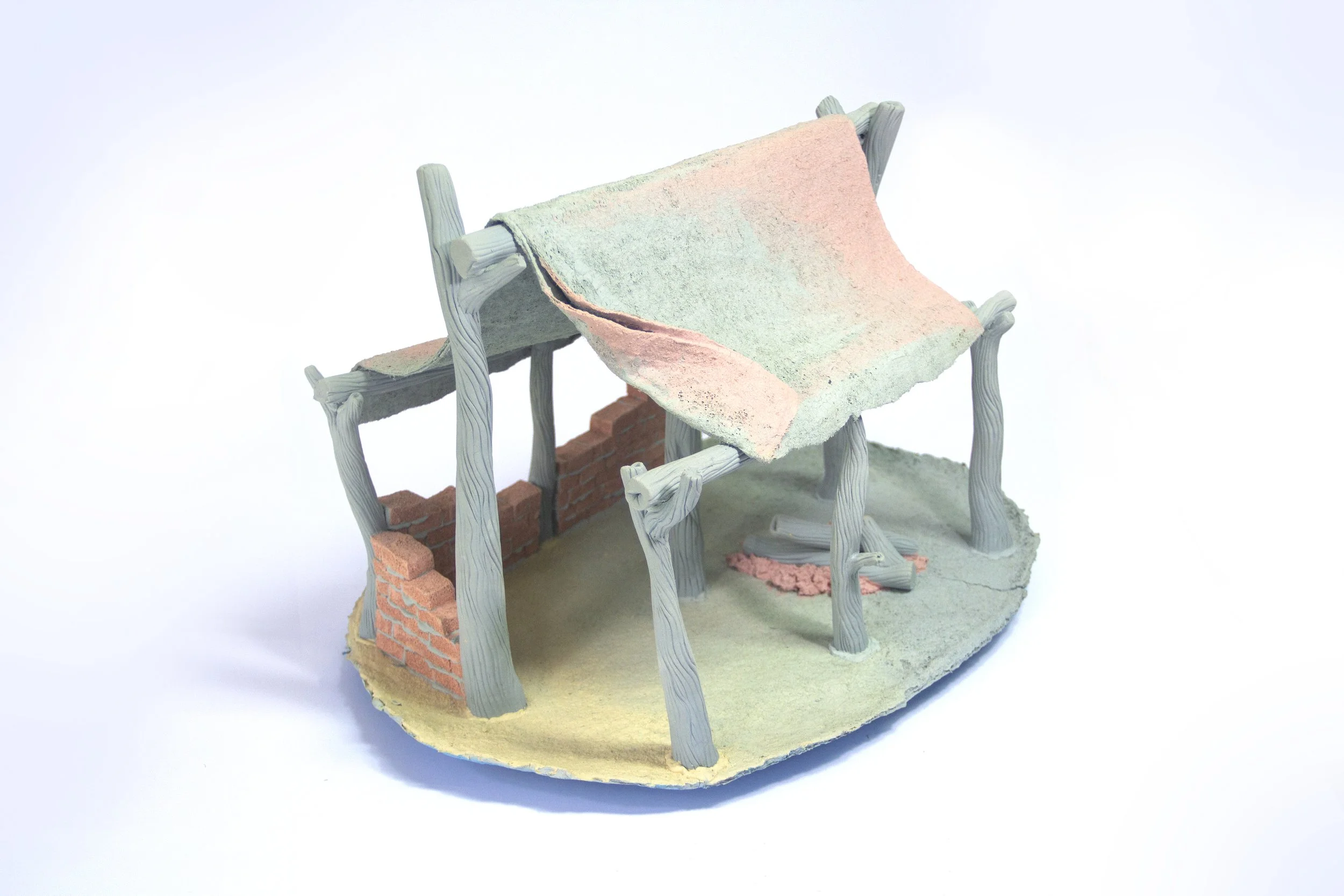
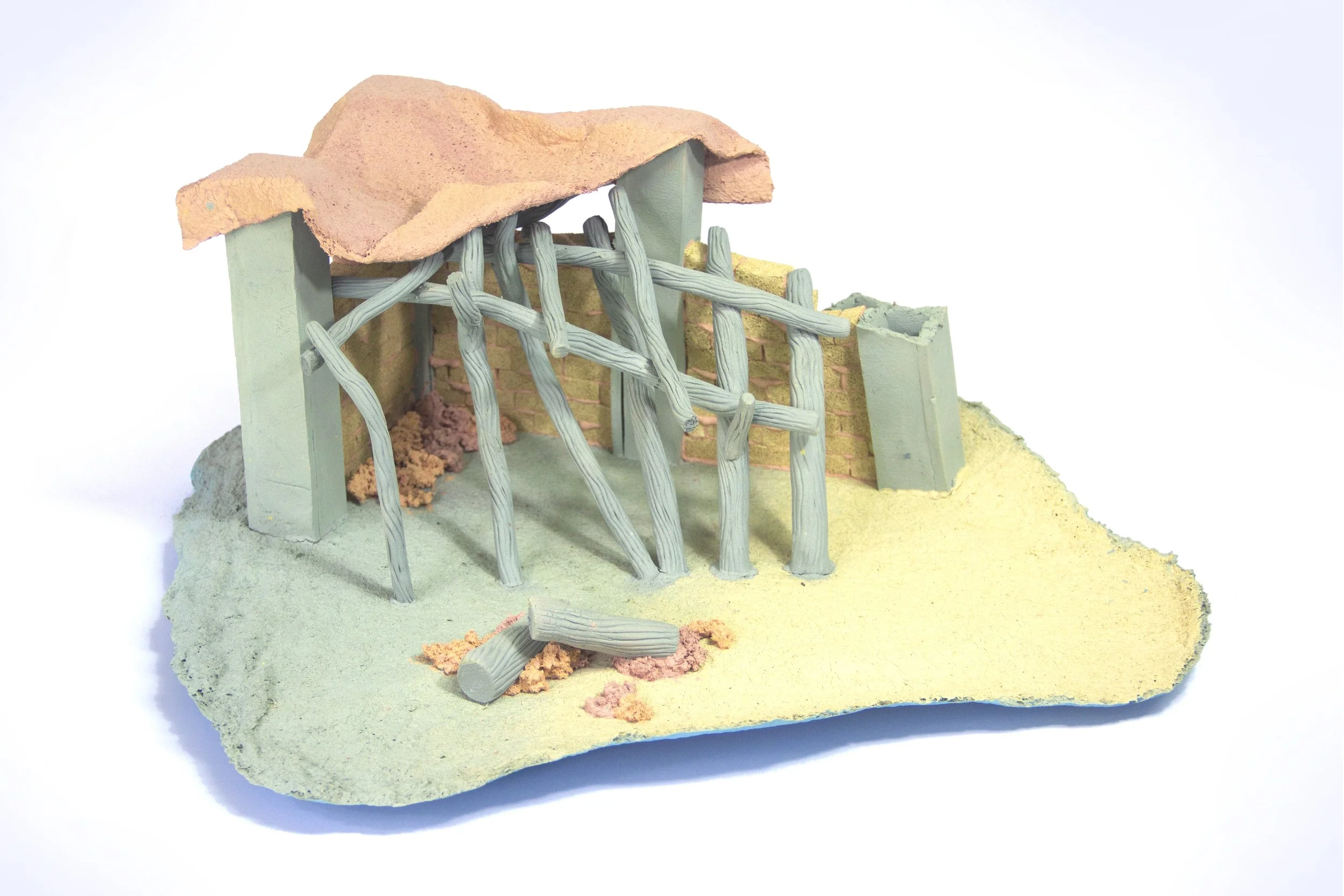
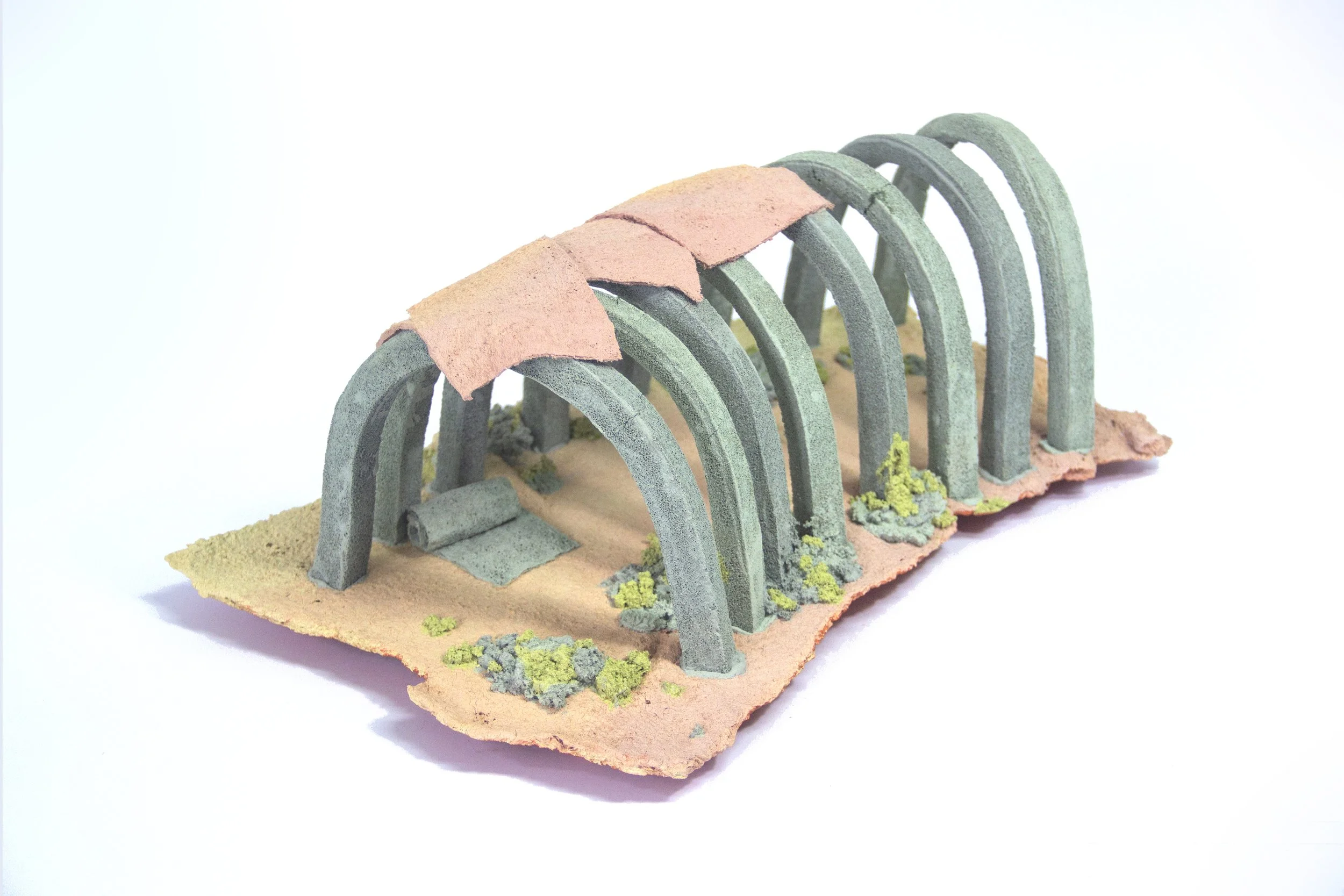
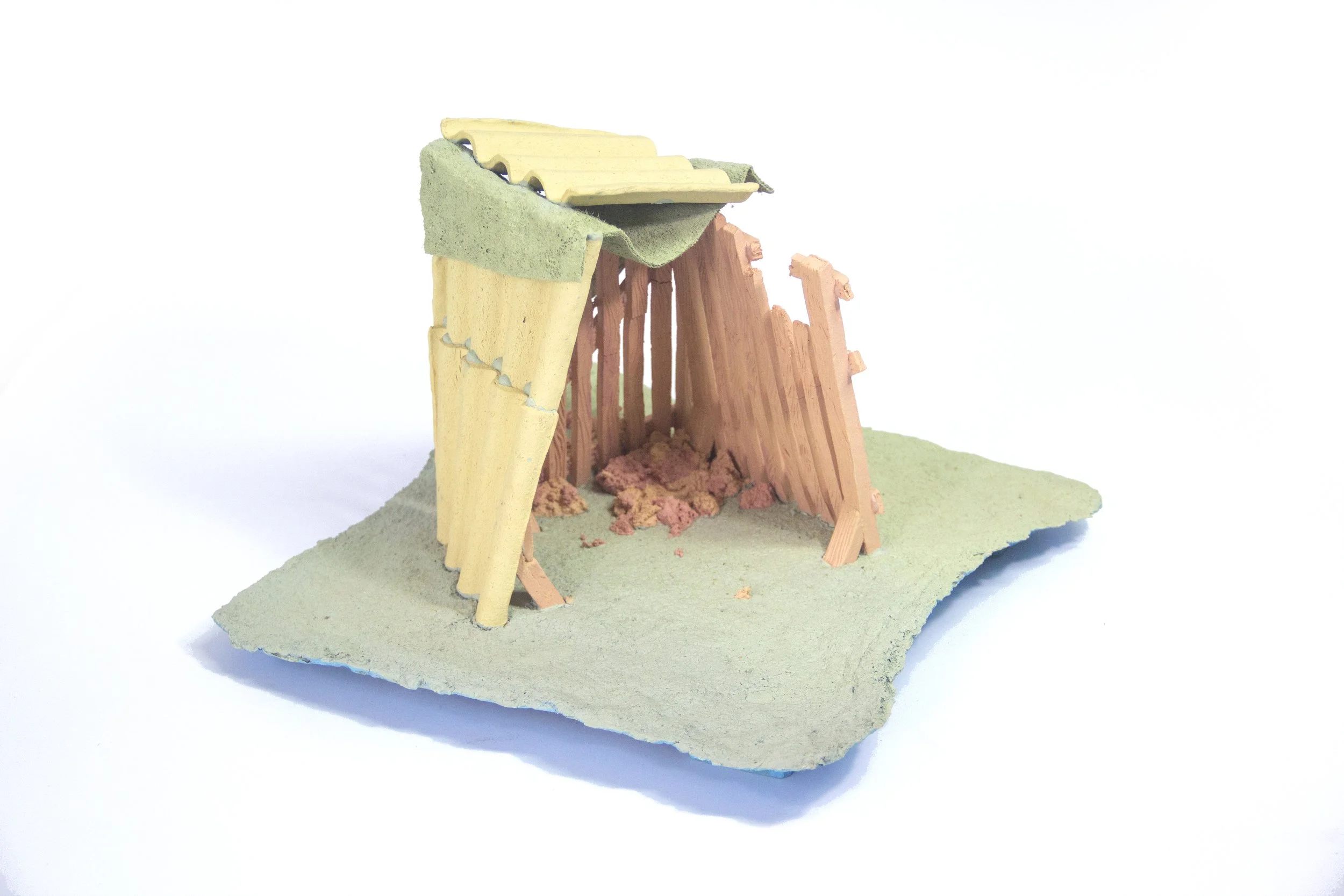
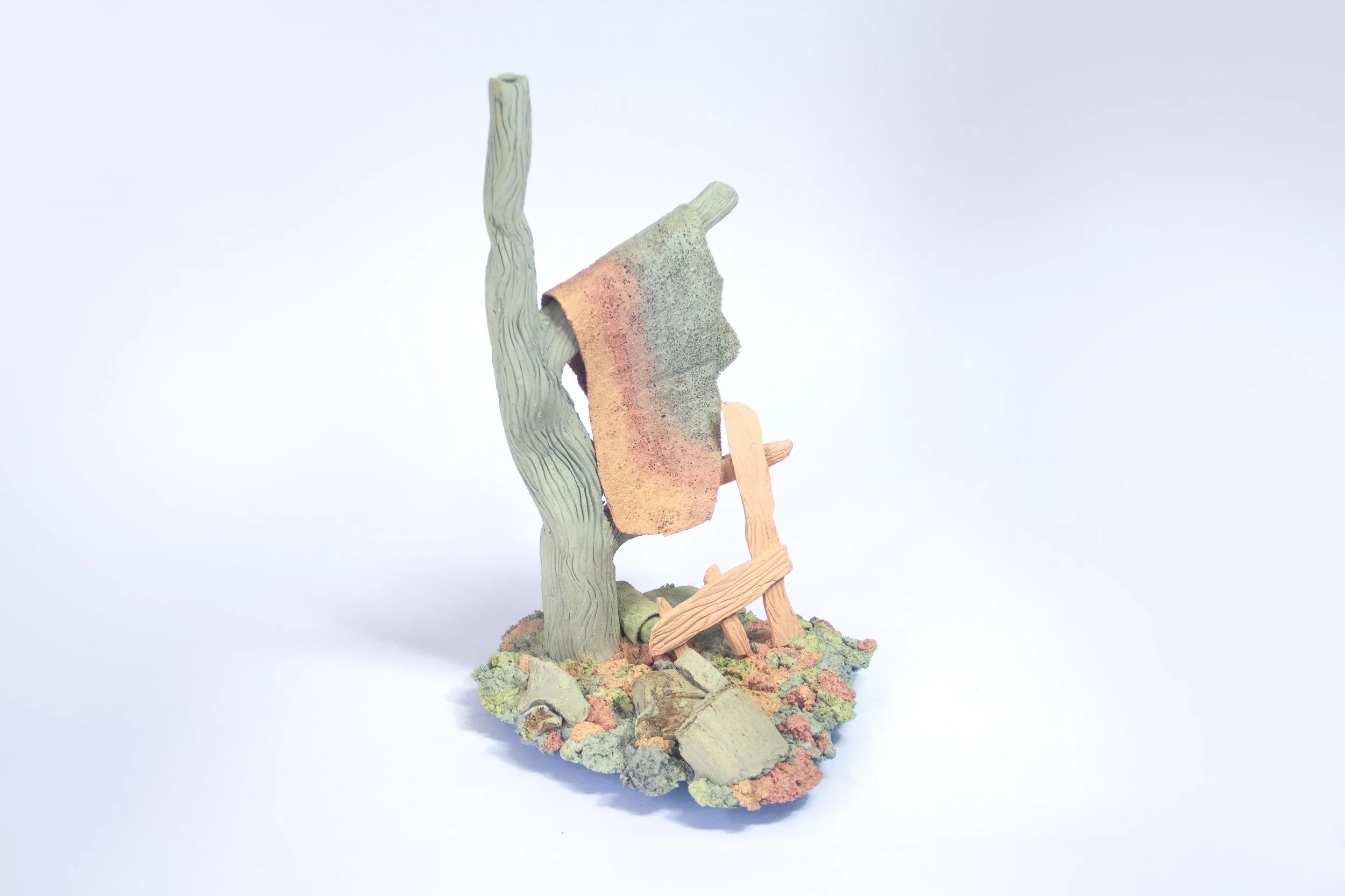
Cushions, blankets, a couple of sticks, rope, and a piece of cardboard: essential elements for a child to build a fort in the living room or the garden; a refuge from the adult world, far from parental surveillance. Curiously, these are the same basic materials used to improvise a cambuche (shack) in an alley, under a bridge, or by the roadside; a refuge against the hostility of the environment and the gaze of passersby. Although both spaces are born from similar gestures, their symbolic weights are worlds apart: while one evokes the nostalgia of a protected childhood—where clutter is freedom and a territory for play—the other carries the mark of the abject, the marginal, and that which is meant to be hidden from the urban landscape. Yet, this does not deprive them of an aesthetic simplicity that brings us closer to the primordial instinct of building.
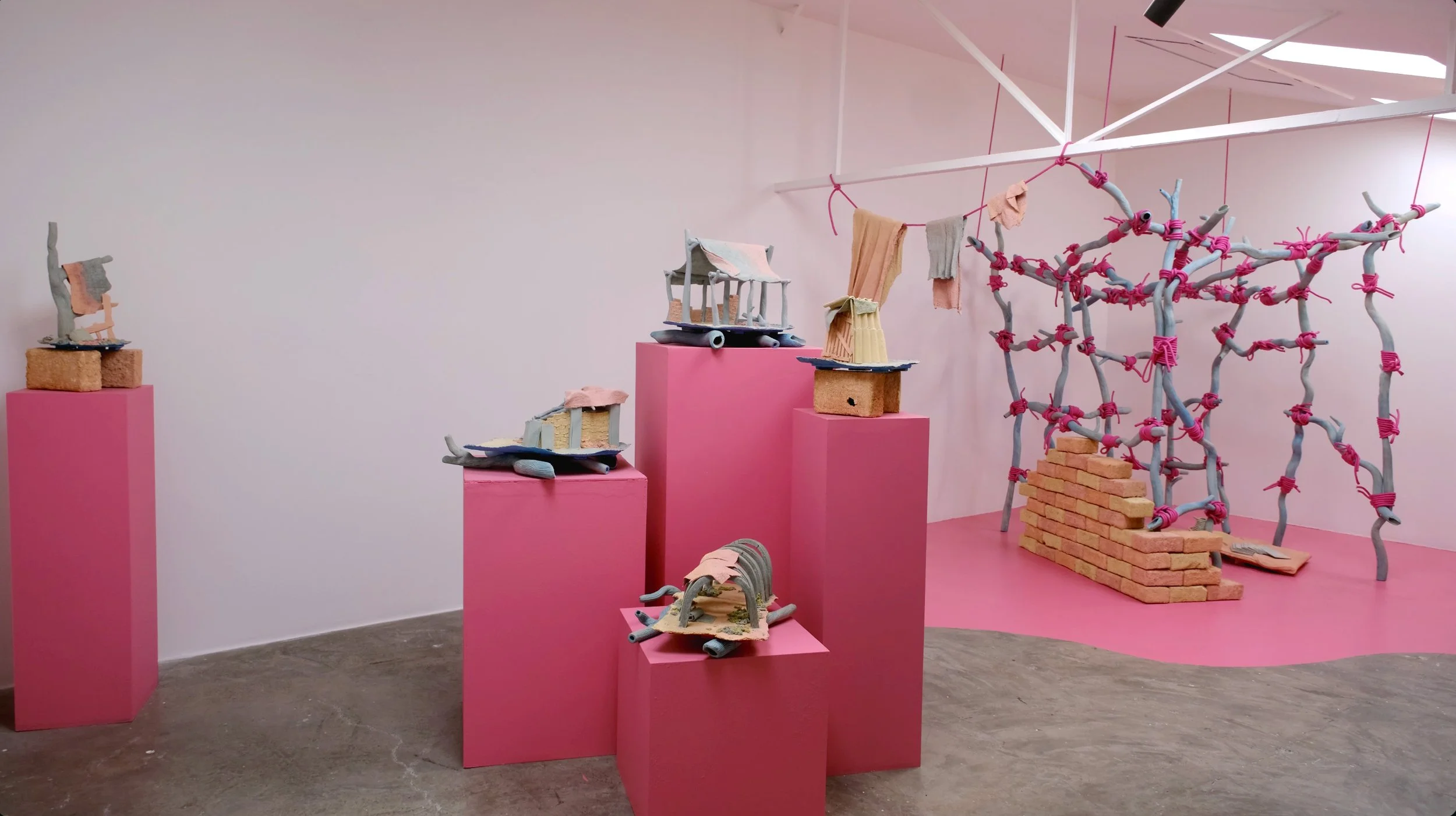
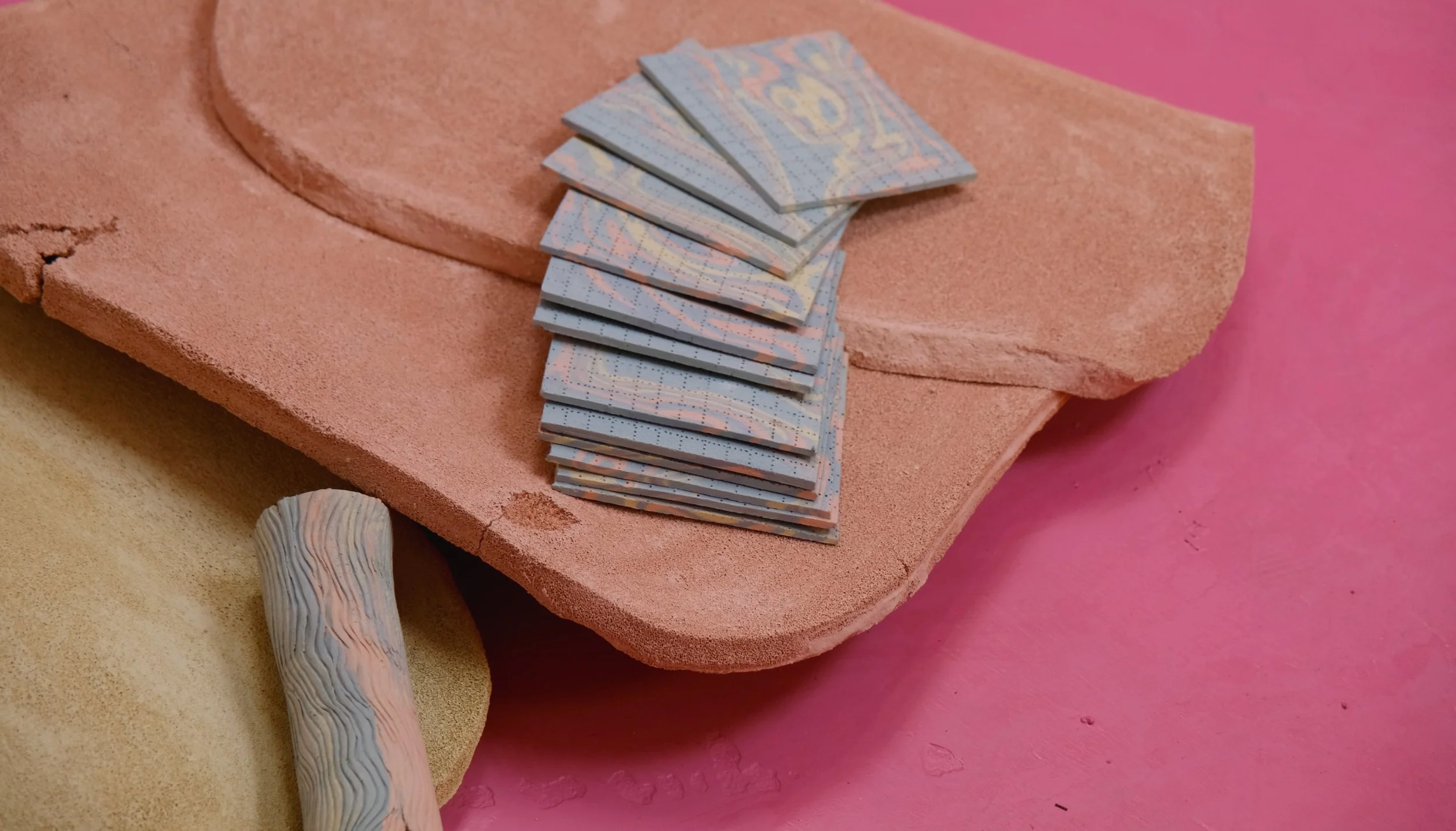
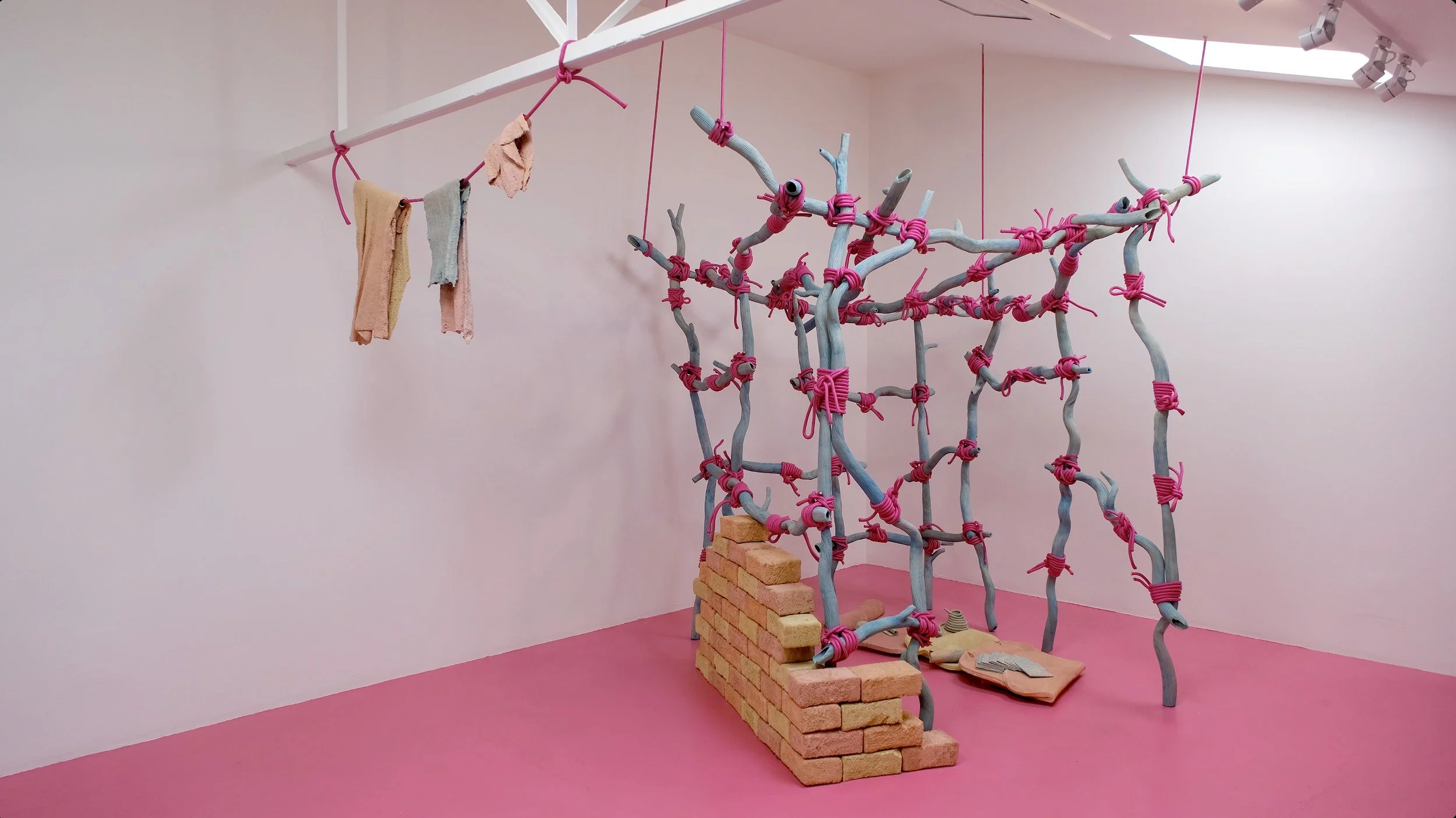
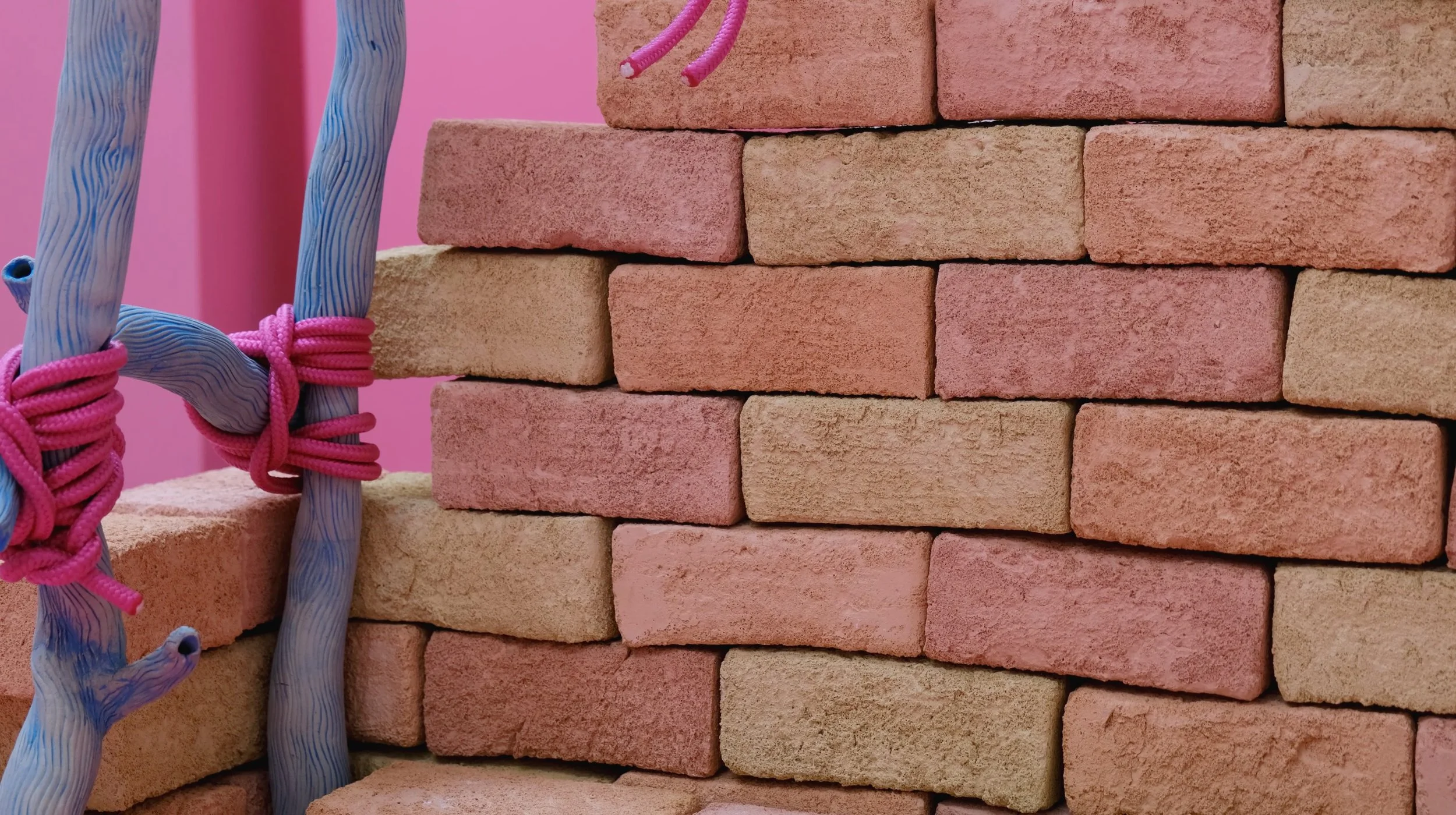
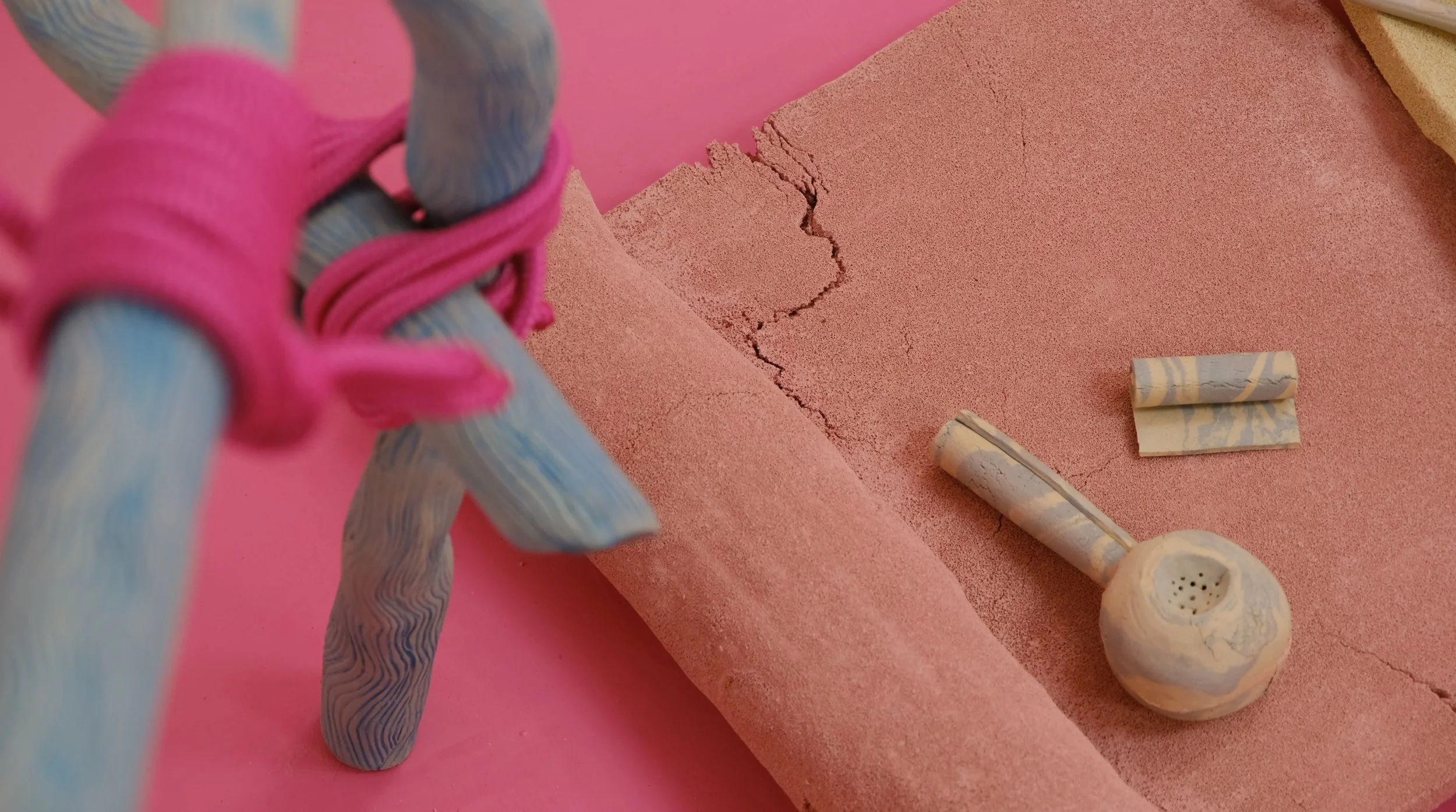
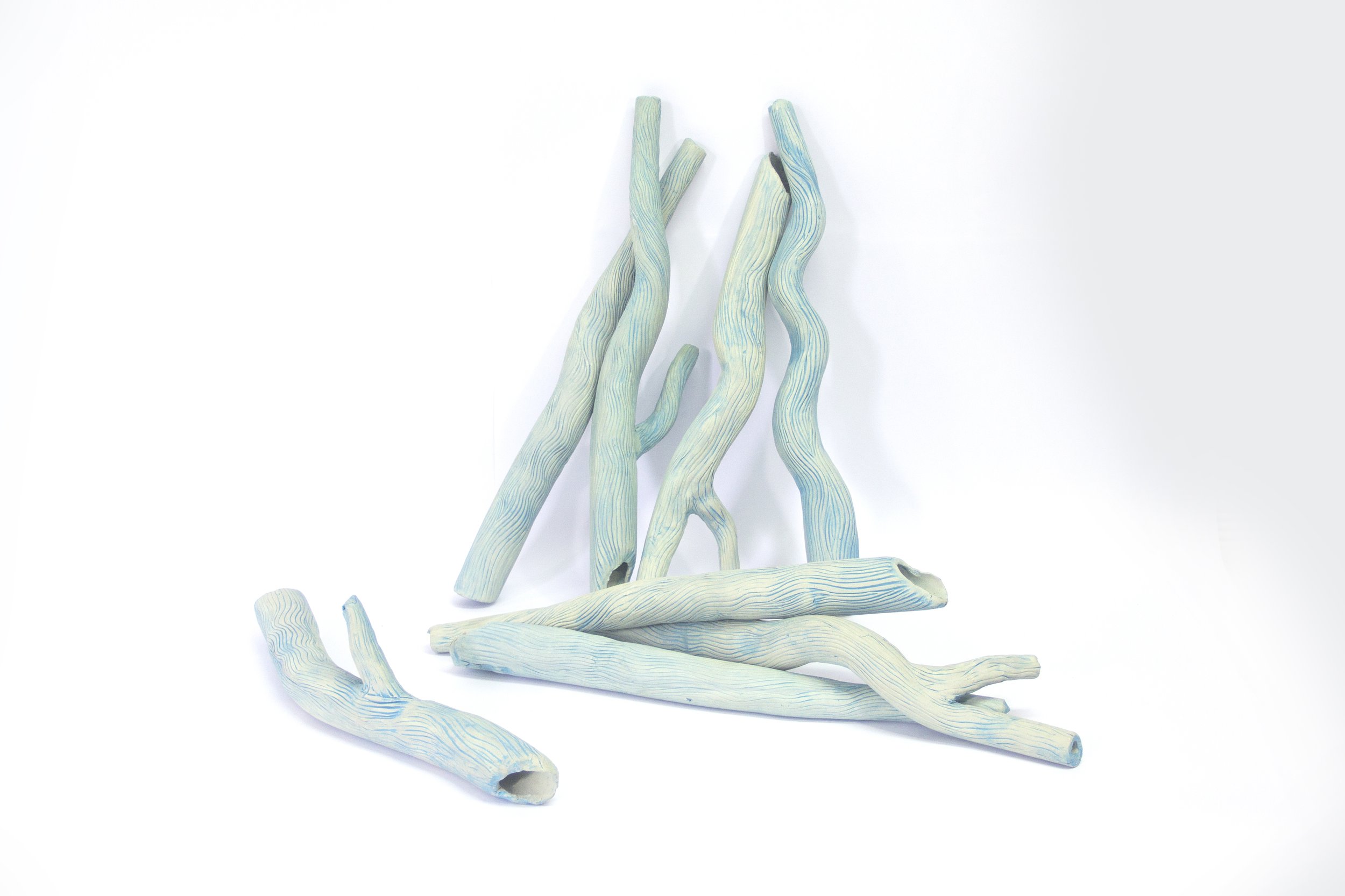
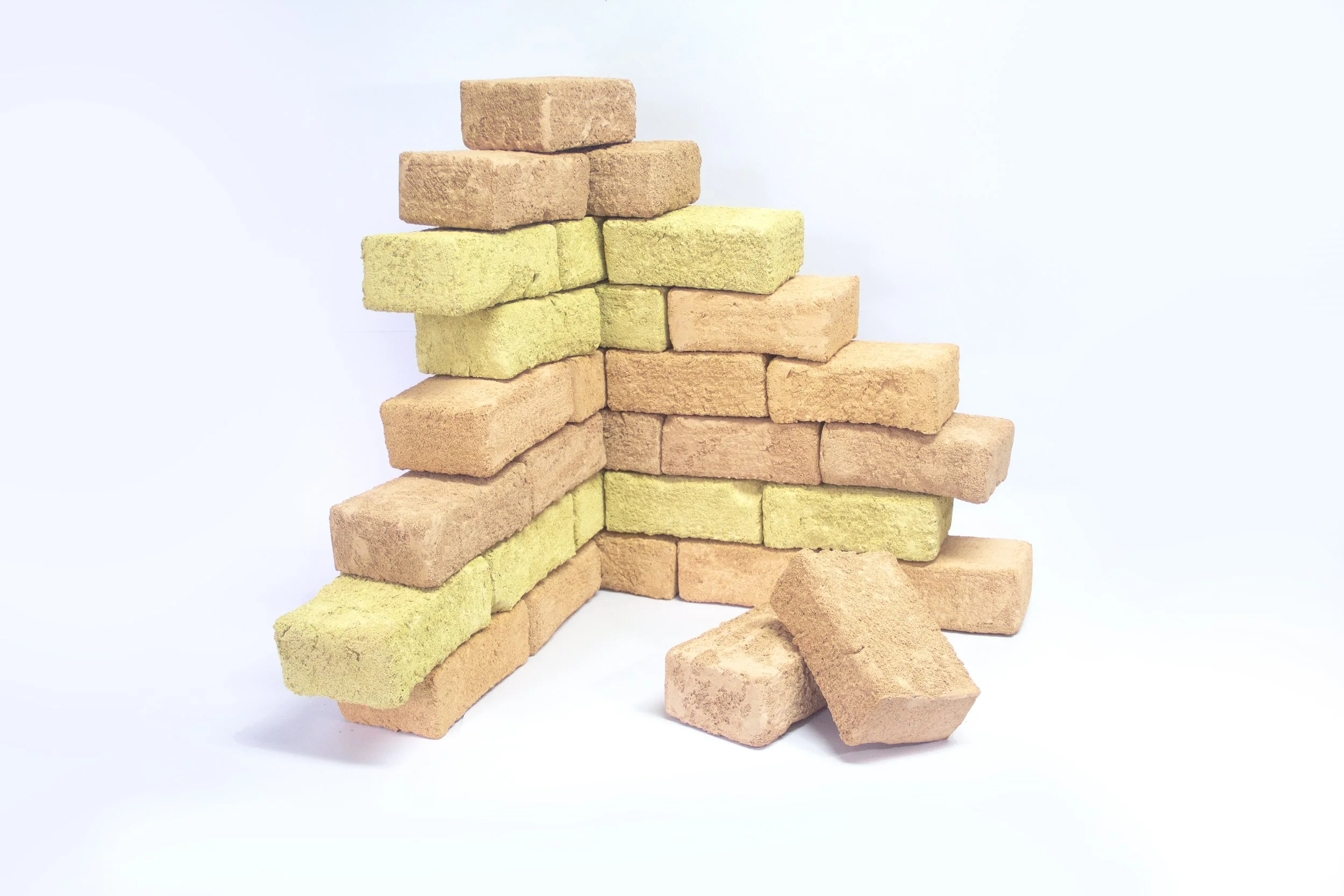
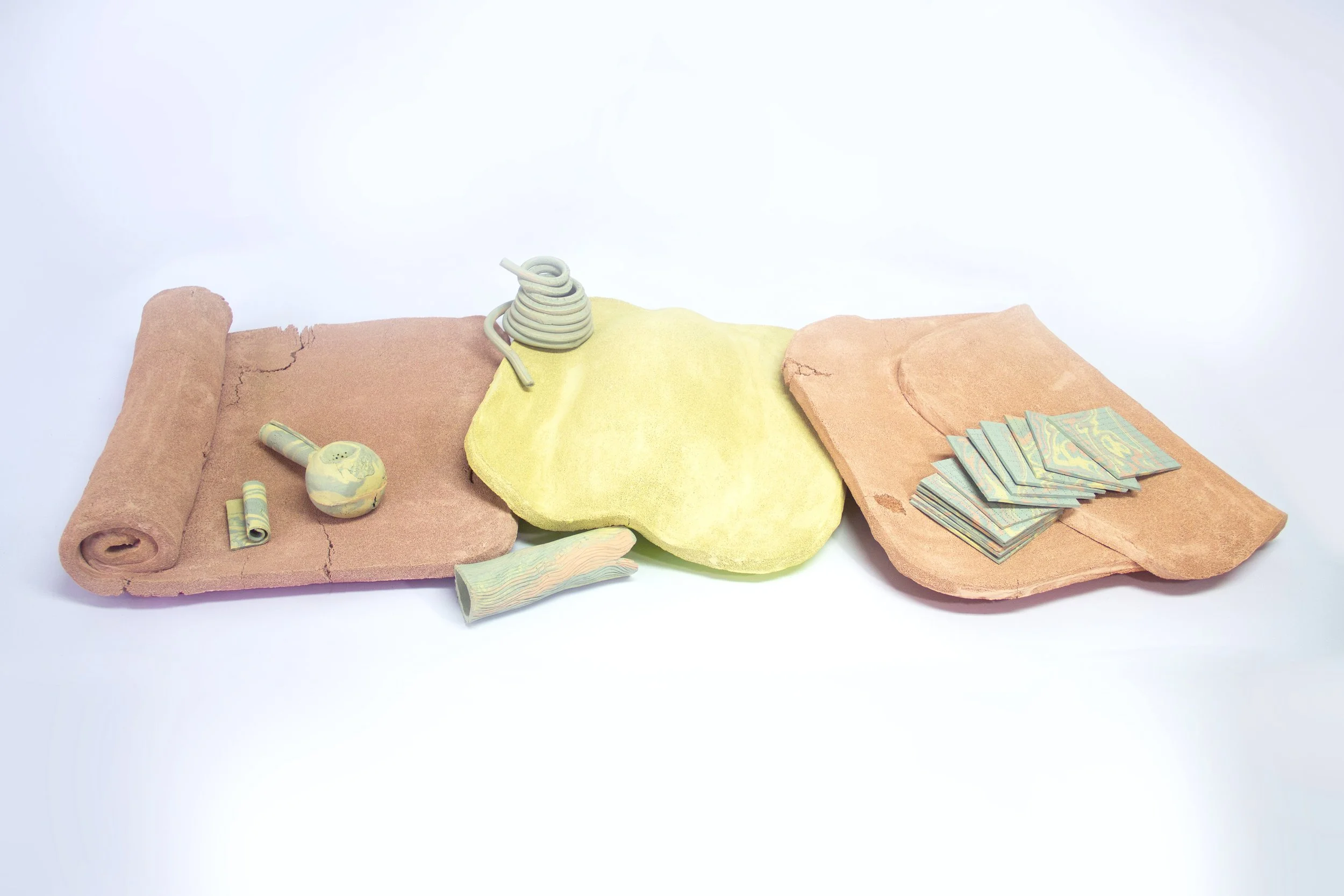
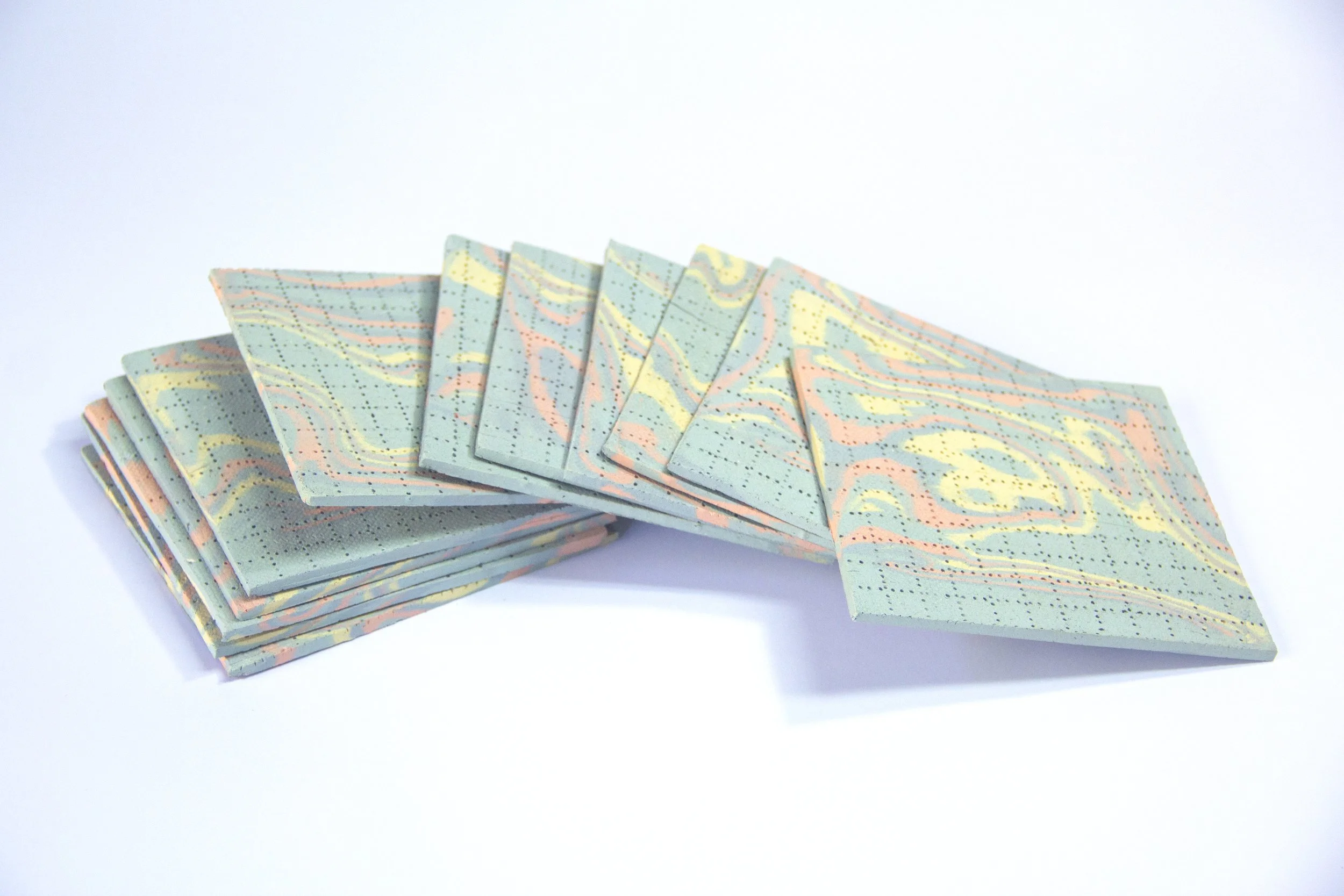
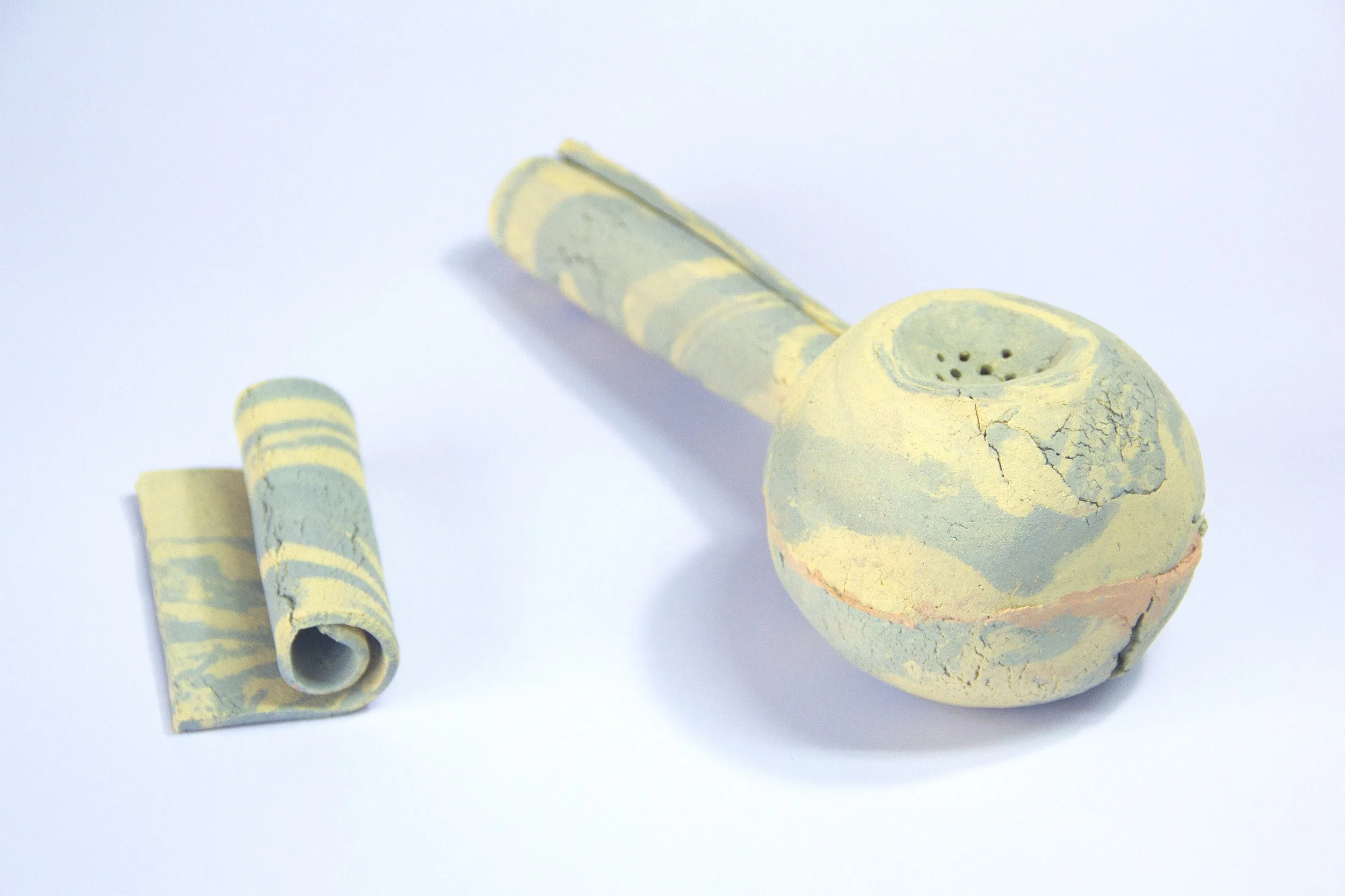
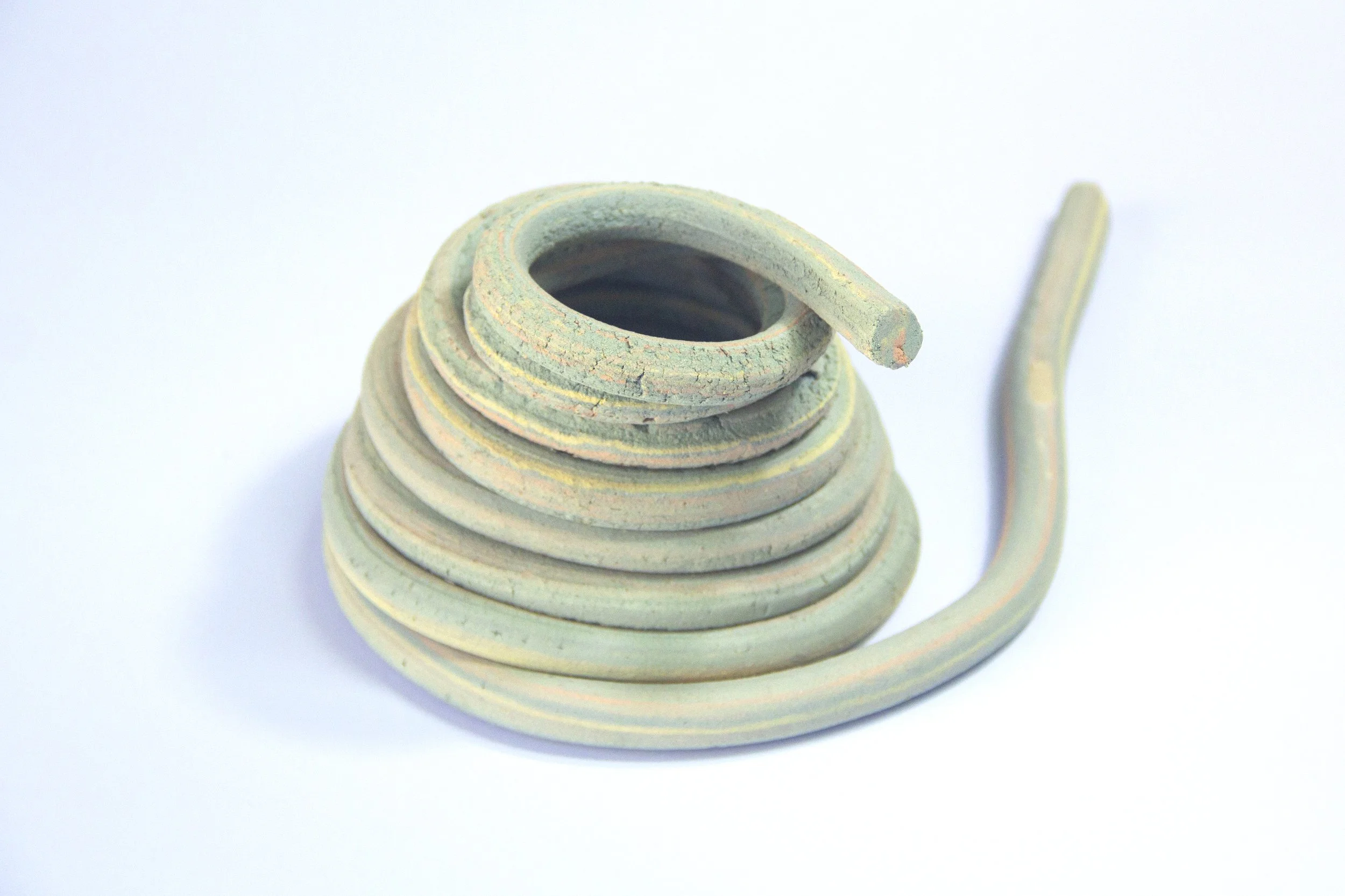
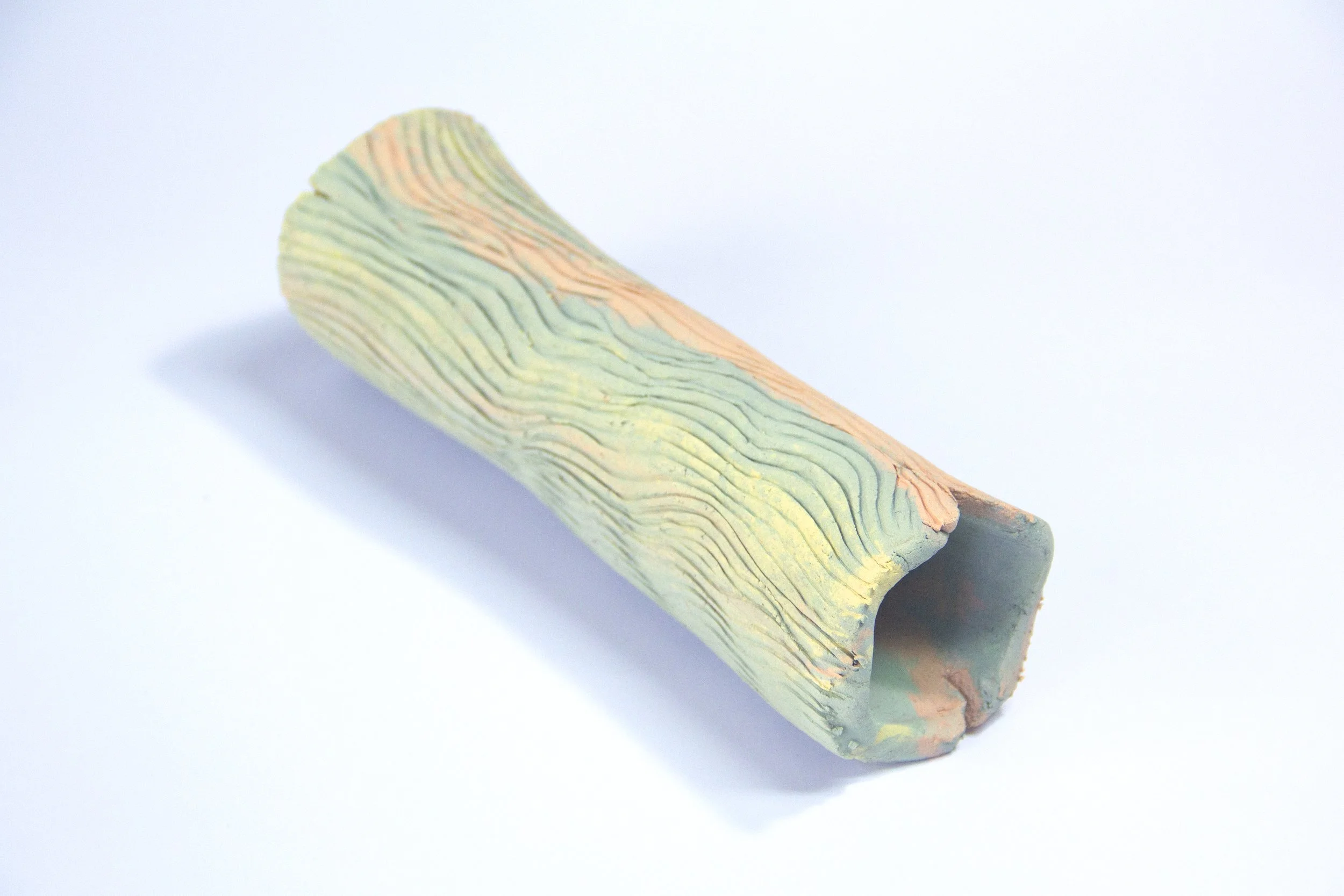
In the installation PALACE, this constructive gesture is propelled through material research in which foams and synthetic fibers are transformed into fragile fossils that defy the very possibilities of what can be called ceramics. Much like playing with a box of Legos, each piece is created separately to offer the freedom of assembling something spontaneously, without sketches or ideas prior to those offered by the material itself. Whether in miniature or life-size, every brick, branch, and piece of foam offers a multiplicity of configurations that adapt to the space and the intention of the moment.
Playing at construction is not just for children; it is not even just for humans. In this space, this gesture translates into a hybrid structure that blurs the boundaries between the playful and the precarious.